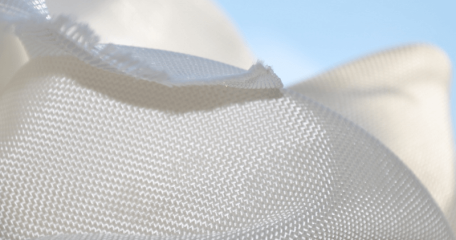
Geotextile Dornit
 Geotextile dornit is made from polyester or polypropylene fibers and is a high-quality non-woven needle-punched fabric. The advantages of dornit geotextile are:
- ideal thermal conductivity;
- increased material density;
- extended range of working temperatures.
The application of dornit geotextile is quite wide. It is actively used in construction works or for repairing railway, road surfaces, for slope reinforcement. The material is also actively used during bridge construction. When organizing slopes, the material is well applied for erosion protection. Most often, dornit geotextile is required for the construction of hydraulic structures, drainage and shore protection structures.
In the process of developing gas and oil fields, this material, unique in its properties, is also used. It contributes to the quality backfilling of pipelines. In construction, dornit geotextile is used both during foundation laying and roof construction, as well as in organizing room insulation. Construction companies that build buildings, structures, as well as construction sites, garages, stadiums, warehouses, workshops, widely use needle-punched fabric, which belongs to geosynthetics, in their work. The use of the material fully justifies itself, so its implementation in various sectors of the economy is entirely justified.
Today, manufacturers offer dornit geotextile of various densities. Thanks to its use:
- The load-bearing capacity of any road surface is significantly increased;
- A high level of layer compaction is ensured;
- The likelihood of roadways and road objects collapsing due to temperature changes is reduced;
- Rutting is prevented.
You can choose dornit F-1, made from rail fibers (nylon, polyester, polyacrylonitrile) or F-2, made from synthetic fiber waste (fabric scraps, nitron fiber and lavsan, capron fiber).